
 Cyber Intelligence & OSINT
 Cyber Investigation
 Digital Forensics
 Compliance & Governance
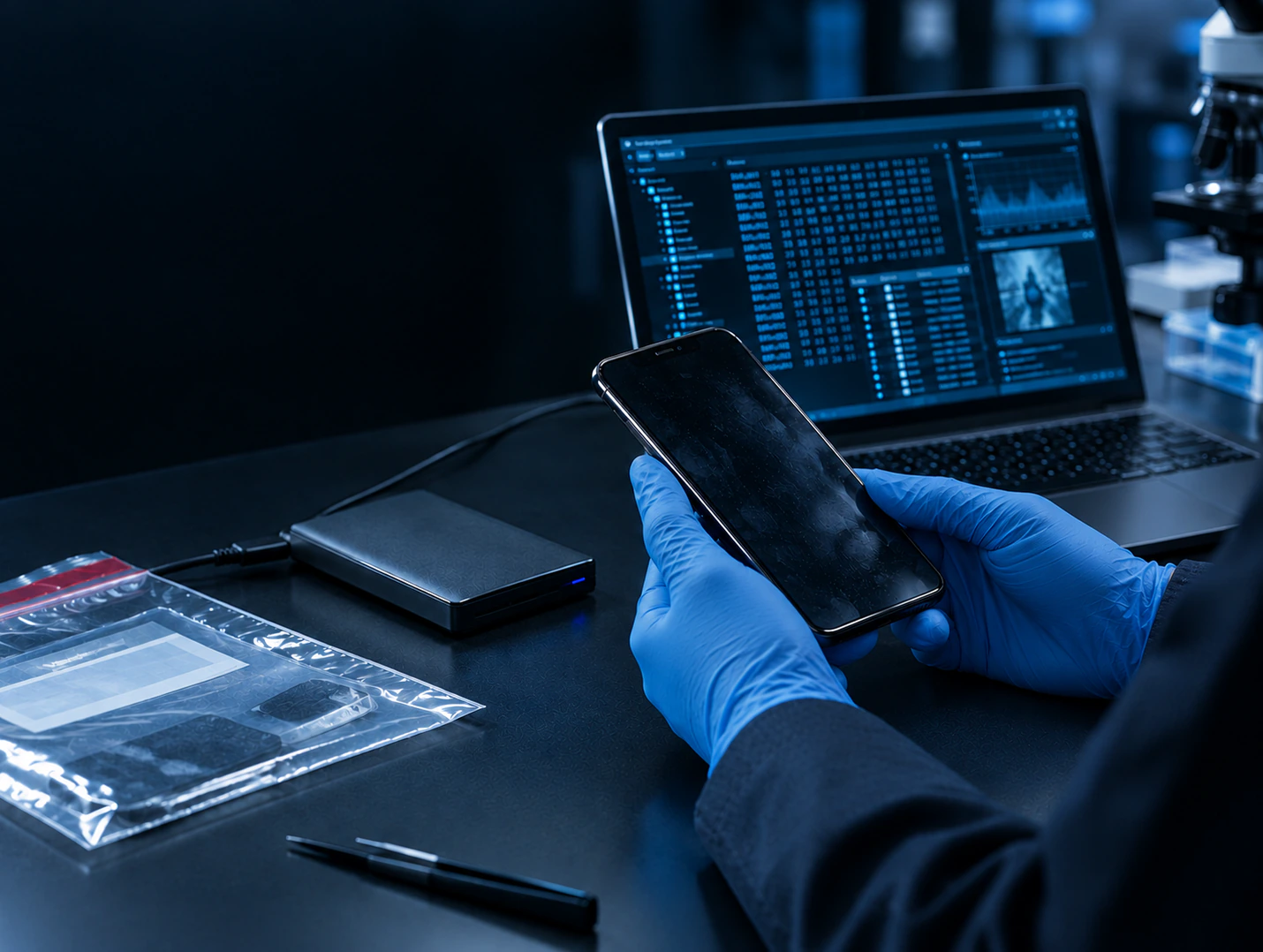
We collect, preserve and analyse data from computers, phones and cloud accounts so that what we find can be relied on in a disciplinary hearing, an insurance claim or a courtroom.
What we examine

Computers and laptops
Forensic imaging and analysis of Windows, Mac and Linux devices: file activity, deleted data, USB use, browsing history and evidence of data transfer.

Phones and tablets
Messages, call records, app data and location history from iOS and Android devices.

Email and cloud accounts
Microsoft 365, Google Workspace and other cloud platforms: sign-in history, mailbox rules, file sharing and audit logs, collected before retention periods expire.

Post-breach examination
After a suspected intrusion, we establish how access was gained, what the attacker did and what data was exposed, and give you a report for insurers, regulators and clients.

Malware analysis
Examination and reverse engineering of suspicious files to establish what they do, where they came from and what they touched.

Forensic collection only
If you have your own analysts or an instructed expert, we can image devices and accounts to an evidential standard and hand over verified copies.
What you receive
- A written forensic report with a plain-English summary
- A timeline of relevant activity
- Exhibits and supporting data
- A witness statement and expert testimony if required